
Connect with Us


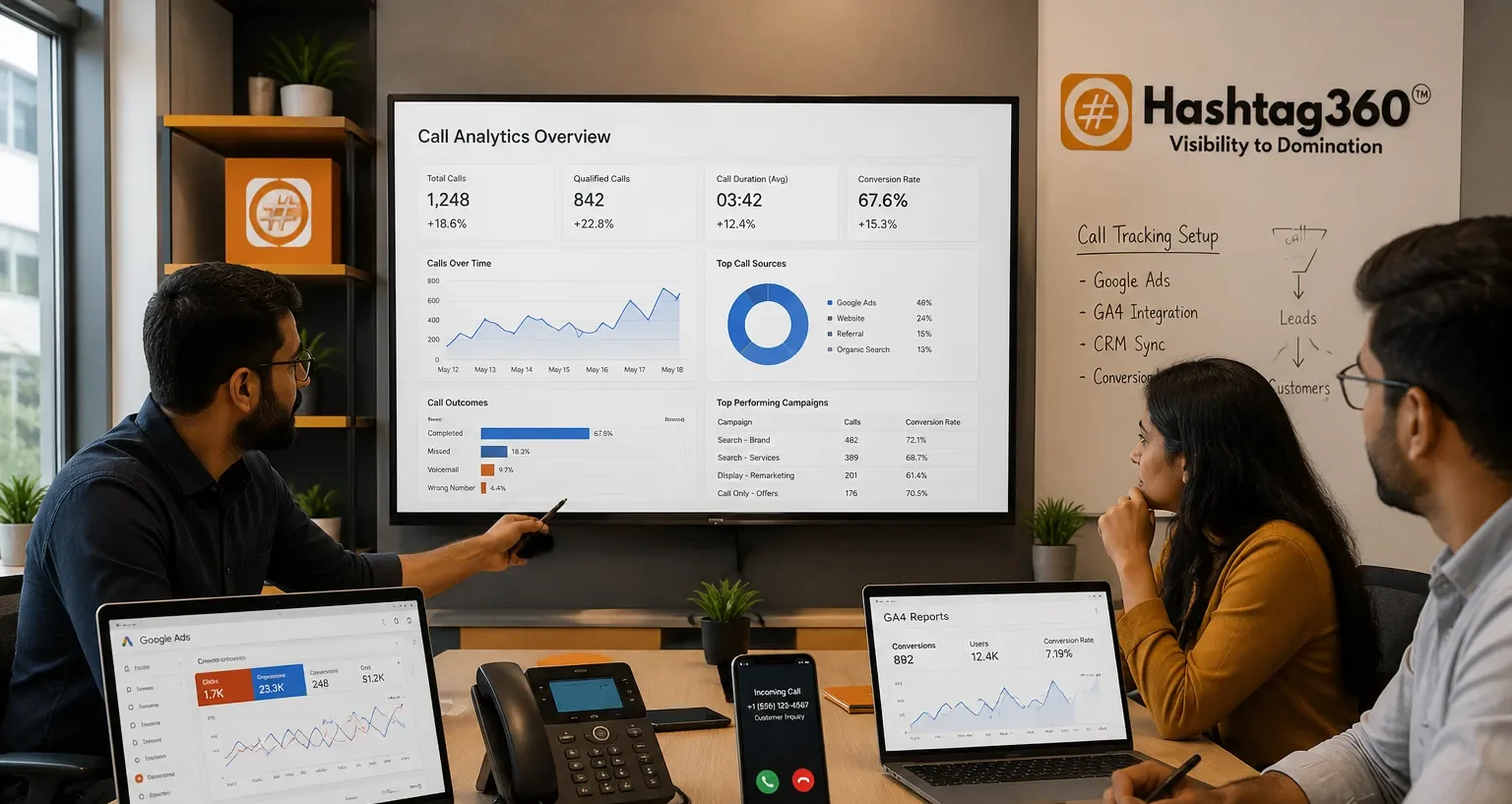
In today’s digital marketing landscape, not every customer completes their journey online. Many people prefer calling a business before making an important purchase, booking a service, or scheduling an appointment. Whether it’s a healthcare provider, real estate agency, law firm, automobile dealership, or B2B company, phone calls often represent the highest-quality leads.
The challenge is that without proper tracking, businesses have no idea which marketing campaign, keyword, advertisement, or webpage generated those calls.
This is where Phone Call Tracking becomes essential.
Phone call tracking bridges the gap between digital marketing and offline conversions by connecting every incoming business call to the exact marketing source that generated it. Instead of guessing what works, marketers gain precise insights into campaign performance and customer behavior.
In this comprehensive guide, you’ll learn everything about phone call tracking, including how it works, its benefits, implementation methods, best practices, integration with Google Ads and GA4, common mistakes, and advanced optimization strategies.
Table of Contents
What is Phone Call Tracking?
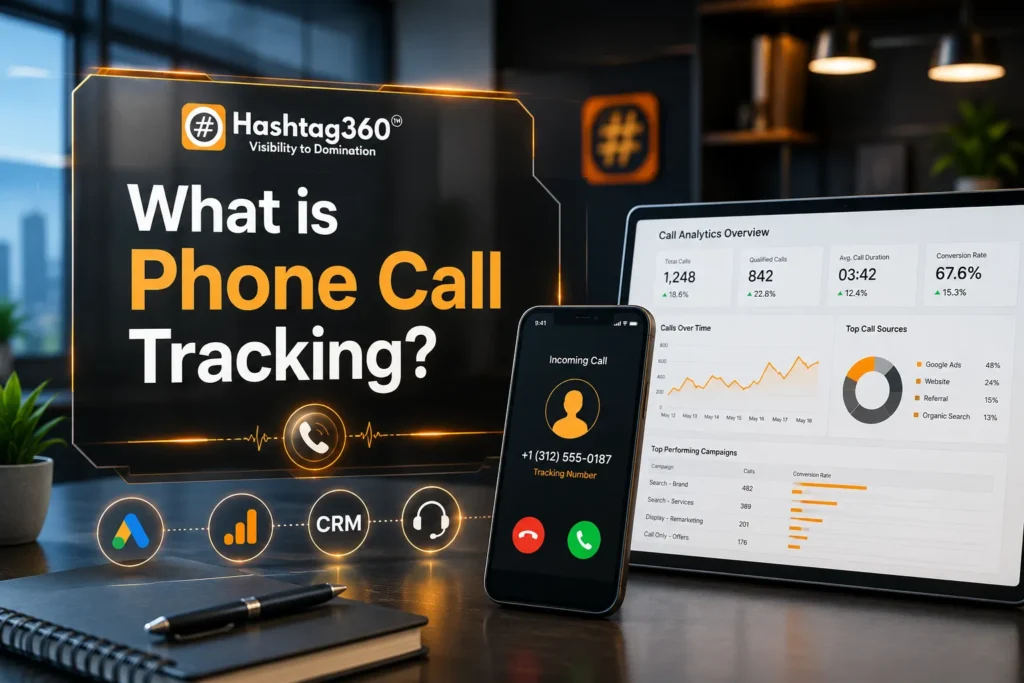
Phone Call Tracking is the process of identifying exactly where a business phone call originated.
Instead of simply knowing that someone called your business, call tracking tells you:
- Which Google Ads campaign generated the call
- Which keyword triggered the ad
- Which landing page the visitor viewed
- Whether the call came from organic search
- Whether Facebook Ads generated the lead
- Which device the customer used
- Geographic location
- Call duration
- Call outcome
- Whether the caller converted into a customer
This data allows businesses to optimize their marketing budget based on actual phone-generated revenue instead of assumptions.
Example
Imagine a plumbing company running advertisements across multiple channels:
- Google Search Ads
- Facebook Ads
- SEO
- Email Marketing
- Local Listings
Without phone call tracking:
150 calls received.
No one knows where they came from.
With phone call tracking:
- Google Ads → 70 calls
- SEO → 40 calls
- Facebook → 20 calls
- Google Business Profile → 15 calls
- Email Campaign → 5 calls
Now marketing decisions become data-driven.
Why Phone Call Tracking Matters
Many businesses incorrectly assume online forms are their only conversions.
In reality:
- 60–80% of high-value leads often prefer calling.
- Phone callers typically have stronger purchase intent.
- Phone conversations help resolve complex questions.
- Sales close faster over calls.
Without tracking these interactions, your ROI calculations remain incomplete.
Phone call tracking enables businesses to:
- Measure true marketing ROI
- Attribute offline conversions
- Improve campaign optimization
- Identify high-performing keywords
- Increase advertising profitability
How Phone Call Tracking Works

The process is surprisingly straightforward.
Step 1: Visitor Clicks an Advertisement
A user clicks:
- Google Ads
- Facebook Ads
- Organic Search
- Social Media
↓
Step 2: Visitor Visits Website
The website detects:
- Source
- Medium
- Campaign
- Keyword
- Device
↓
Step 3: Dynamic Phone Number Appears
Instead of displaying the default business phone number, a unique tracking number is shown.
↓
Step 4: Visitor Calls
The tracking platform records:
- Source
- Landing page
- Visitor session
- Campaign
- Keyword
- Call duration
↓
Step 5: Data Sent to Analytics Platforms
The information flows into:
- Google Ads
- GA4
- CRM
- Call tracking software
Now marketers know exactly which campaign generated the phone call.
Types of Phone Call Tracking
Different businesses require different tracking methods.
1. Static Number Tracking
Each marketing channel gets a unique phone number.
Example:
Google Ads
→ 98765-11111
→ 98765-22222
SEO
→ 98765-33333
Easy to implement but less detailed.
2. Dynamic Number Insertion (DNI)
Dynamic Number Insertion automatically replaces your business phone number depending on the visitor’s traffic source.
Example:
Visitor A (Google Ads)
→ Number A
Visitor B (Facebook)
→ Number B
Visitor C (Organic Search)
→ Number C
This provides highly accurate attribution.
3. Google Forwarding Numbers
Google automatically replaces your business phone number in eligible Google Ads with a forwarding number.
It tracks:
- Calls
- Duration
- Area code
- Call start/end time
Ideal for Google Ads advertisers.
4. Call Tracking Software
Dedicated platforms provide advanced features such as:
- Call recording
- AI conversation analysis
- Keyword attribution
- CRM integration
- Lead scoring
- Revenue attribution
Static vs Dynamic Number Insertion
| Feature | Static Tracking | Dynamic Tracking |
|---|---|---|
| Easy Setup | ✅ | Moderate |
| Visitor-Level Attribution | ❌ | ✅ |
| Keyword Tracking | ❌ | ✅ |
| Campaign Tracking | Limited | Excellent |
| Landing Page Tracking | Limited | Excellent |
| Best For | Small Businesses | Medium & Large Businesses |
Benefits of Phone Call Tracking
Complete Marketing Attribution
Know exactly where every phone lead originated.
Better Google Ads Optimization
Identify:
- Best campaigns
- Best keywords
- Best ad copies
- Best devices
Pause poor performers.
Scale profitable campaigns.
Accurate ROI Measurement
Instead of measuring only form submissions, businesses measure:
- Calls
- Bookings
- Sales
- Revenue
Better Customer Insights
Understand:
- Peak calling hours
- Customer intent
- Frequently asked questions
- Geographic demand
Improved Sales Performance
Recorded calls help:
- Train sales teams
- Improve scripts
- Increase close rates
Phone Call Tracking with Google Ads
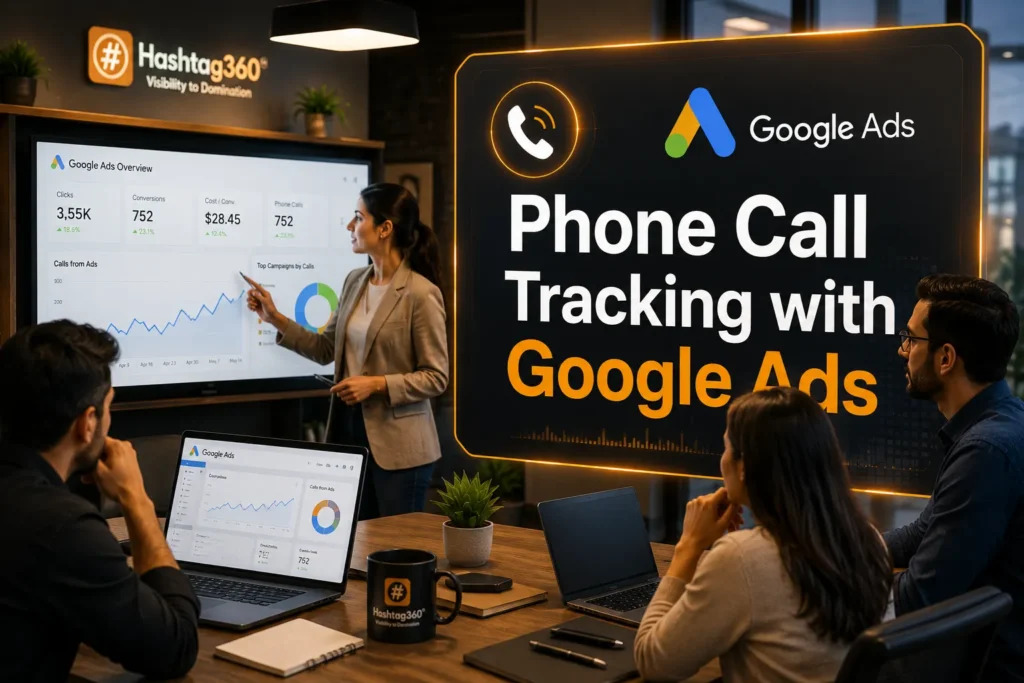
Google Ads supports call tracking through:
Call Extensions
Users can directly call from search results.
Call Ads
Ads designed specifically to generate phone calls.
Website Call Conversions
Google measures:
- Calls from website
- Calls after ad clicks
- Qualified phone conversions
This allows Smart Bidding to optimize for valuable calls.
Phone Call Tracking with GA4
GA4 focuses on events.
Common call events include:
- click_to_call
- phone_call
- qualified_call
- call_conversion
- offline_conversion
By combining GA4 with call tracking software, businesses gain a complete picture of online behavior and offline phone conversions.
Dynamic Number Insertion (DNI)
Dynamic Number Insertion is considered the gold standard for accurate call attribution.
When someone visits your website, JavaScript dynamically swaps the displayed phone number based on the visitor’s source.
Example:
Google Ads Visitor
→ 1800-111-111
Facebook Visitor
→ 1800-222-222
SEO Visitor
→ 1800-333-333
The customer experiences a seamless journey, while marketers gain detailed attribution data.
Phone Call Attribution Models
Several attribution approaches can be used.
First Touch Attribution
Credits the first interaction.
Last Touch Attribution
Credits the final interaction before the call.
Linear Attribution
Distributes credit equally across touchpoints.
Data-Driven Attribution
Uses machine learning to assign credit based on actual customer behavior.
This is often the preferred model for businesses with sufficient conversion volume.
Important Metrics to Measure
Track these KPIs regularly:
- Number of Calls
- Qualified Calls
- Missed Calls
- Average Call Duration
- Cost Per Call
- Call Conversion Rate
- Revenue Per Call
- Return on Ad Spend (ROAS)
- Customer Acquisition Cost (CAC)
- Repeat Call Rate
These metrics help optimize both marketing and sales performance.
Industries That Benefit Most
Phone call tracking is particularly valuable for:
- Healthcare & Clinics
- Real Estate
- Automobile Dealerships
- Insurance Agencies
- Legal Services
- Home Services (Plumbing, Electrical, HVAC)
- Education & Coaching
- Travel Agencies
- Hospitality
- Financial Services
- B2B Companies
- Local Service Businesses
If customers often call before making a decision, phone call tracking should be part of your marketing stack.
Best Practices for Phone Call Tracking

Use Dynamic Number Insertion
It provides the most accurate attribution across channels.
Define Qualified Call Criteria
For example:
- Minimum call duration (e.g., 60 seconds)
- Successful connection
- Calls during business hours
Integrate with Google Ads
Import qualified calls as conversions so automated bidding can optimize for valuable leads.
Connect with GA4 and CRM
Link call data with analytics and customer records for end-to-end reporting.
Monitor Call Quality
Review recordings (where legally permitted) to improve customer service and sales performance.
Review Data Regularly
Analyze trends weekly or monthly to refine campaigns, budgets, and landing pages.
Common Mistakes to Avoid
Many businesses fail to get the full value from phone call tracking because of implementation errors.
Common mistakes include:
- Tracking only online forms and ignoring calls
- Using a single phone number across all marketing channels
- Not importing call conversions into Google Ads
- Failing to define what qualifies as a valuable call
- Ignoring missed calls
- Not integrating call tracking with GA4 or CRM systems
- Making optimization decisions based solely on call volume instead of qualified leads and revenue
- Neglecting privacy and consent requirements for call recording
Avoiding these issues leads to more reliable attribution and smarter marketing decisions.
Advanced Phone Call Tracking Strategies
As your marketing matures, consider these advanced approaches:
AI-Powered Call Analysis
Artificial intelligence can analyze conversations to identify:
- Customer intent
- Buying signals
- Frequently asked questions
- Sentiment
- Sales opportunities
Offline Conversion Import
Import qualified phone call conversions into Google Ads so Smart Bidding can optimize for calls that result in real business outcomes, not just dial attempts.
CRM Integration
Connect call tracking with your CRM to measure the complete customer lifecycle—from the first ad click to closed revenue.
Multi-Location Tracking
Businesses with multiple branches can assign unique tracking numbers to each location while maintaining centralized reporting.
Revenue Attribution
Go beyond counting calls by assigning revenue to each converted lead, enabling true ROI analysis for every campaign.
Privacy and Compliance
Phone call tracking should always be implemented responsibly.
Keep these considerations in mind:
- Inform users if calls are recorded, where legally required.
- Comply with applicable privacy regulations in your region.
- Store customer data securely.
- Limit access to call recordings and sensitive information.
- Establish retention policies for recorded calls and analytics data.
Responsible data practices build customer trust while supporting accurate marketing measurement.
How Phone Call Tracking Fits into the Modern Marketing Funnel
Digital marketing has evolved far beyond measuring clicks and website visits. Businesses today need to understand the complete customer journey—from the first interaction with an advertisement to the final purchase. While online actions such as form submissions, downloads, and purchases are easy to measure, phone conversations often occur outside traditional analytics platforms.
This creates a significant blind spot. A customer may discover your business through Google Search, read several pages on your website, compare pricing, and then decide to call before making a purchase. If that phone call isn’t tracked, the marketing campaign responsible for generating the lead receives no credit.
Phone call tracking fills this gap by connecting offline interactions with online marketing efforts.
A typical customer journey may look like this:
- Customer searches for “best digital marketing agency.”
- Clicks on your Google Search Ad.
- Visits your landing page.
- Reads your service details.
- Clicks the phone number.
- Calls your sales team.
- Books a consultation.
- Becomes a paying client.
Without call tracking, analytics platforms may only record a website visit. With call tracking, every step—including the phone conversation and resulting sale—is attributed to the original campaign.
Why High-Intent Customers Prefer Phone Calls
Although digital communication channels continue to grow, many customers still prefer speaking directly with a business before making important purchasing decisions.
Phone conversations allow customers to:
- Receive immediate answers.
- Clarify pricing and service details.
- Build trust with a real person.
- Resolve complex concerns.
- Negotiate customized solutions.
- Schedule appointments quickly.
This behavior is especially common for high-value services where personal interaction influences buying decisions.
Examples include:
- Real estate consultations
- Medical appointments
- Financial services
- Legal advice
- Automotive sales
- Home improvement projects
- B2B software demonstrations
These industries often see phone calls converting at a much higher rate than standard website forms.
Phone Call Tracking vs Traditional Conversion Tracking
Many businesses rely solely on website conversion tracking, which measures actions such as:
- Form submissions
- Newsletter sign-ups
- Product purchases
- PDF downloads
- Button clicks
While these metrics are valuable, they only capture online interactions.
Phone call tracking complements traditional conversion tracking by measuring valuable offline actions.
| Traditional Conversion Tracking | Phone Call Tracking |
|---|---|
| Form submissions | Incoming calls |
| Online purchases | Qualified sales calls |
| Newsletter sign-ups | Appointment bookings |
| Button clicks | Consultation requests |
| Downloads | Customer inquiries |
| Checkout completion | Offline sales conversations |
When combined, these methods provide a comprehensive view of customer behavior and marketing performance.
Essential Features to Look for in a Phone Call Tracking Solution
Not all call tracking platforms offer the same capabilities. When evaluating solutions, prioritize features that support accurate attribution and business growth.
Dynamic Number Insertion
Displays unique phone numbers based on the visitor’s traffic source, ensuring precise attribution.
Keyword-Level Attribution
Identifies the exact keyword that generated each phone call, helping optimize paid search campaigns.
Call Recording
Records conversations (where legally permitted) for quality assurance, training, and customer service improvements.
Call Scoring
Automatically categorizes calls as qualified or unqualified based on predefined criteria or AI analysis.
CRM Integration
Syncs call data with customer relationship management platforms, enabling end-to-end lead tracking.
Google Ads & GA4 Integration
Imports qualified calls as conversions and combines online and offline analytics into a single reporting framework.
Multi-Location Support
Ideal for franchises or businesses with multiple offices that require location-specific tracking.
Real-Time Reporting
Provides dashboards with live metrics such as call volume, duration, source, campaign, and conversion rates.
Measuring the ROI of Phone Call Tracking
One of the greatest advantages of phone call tracking is its ability to connect marketing spend with actual business outcomes.
For example:
A company invests $5,000 per month in Google Ads.
Without call tracking, analytics report:
- 120 form submissions
- Cost per lead appears high
- ROI seems modest
After implementing phone call tracking:
- 120 form submissions
- 180 qualified phone calls
- 75 new customers
- Higher-than-expected revenue
The company discovers that more than half of its customers prefer calling instead of completing online forms. Marketing campaigns that previously appeared underperforming are now recognized as top revenue drivers.
This level of visibility supports smarter budgeting, more accurate ROI calculations, and better campaign optimization.
Integrating Phone Call Tracking with Your Marketing Stack
Phone call tracking becomes even more powerful when integrated with other marketing tools.
A typical integration ecosystem includes:
- Google Ads for importing call conversions and optimizing Smart Bidding.
- Google Analytics 4 (GA4) for unified event reporting.
- CRM platforms such as Salesforce or HubSpot to connect calls with customer records.
- Marketing automation tools for nurturing leads after initial conversations.
- Business intelligence dashboards for executive reporting and cross-channel analysis.
These integrations eliminate data silos and provide a complete picture of customer acquisition.
Phone Call Tracking Best Practices for Long-Term Success
Implementing phone call tracking is only the first step. To maximize its value:
- Define what constitutes a qualified call based on duration, intent, or outcome.
- Regularly review call recordings to identify training opportunities.
- Align marketing and sales teams on lead qualification criteria.
- Import qualified calls into Google Ads to improve automated bidding.
- Monitor trends by campaign, keyword, location, and device.
- Continuously test landing pages and call-to-action placements to increase call volume.
A disciplined optimization process ensures that call tracking data leads to measurable business improvements rather than simply generating reports.
Frequently Asked Questions
What is phone call tracking?
Phone call tracking is a method of identifying which marketing channel, campaign, keyword, or webpage generated an incoming business phone call.
Is phone call tracking only for Google Ads?
No. It can track calls from Google Ads, SEO, social media, email marketing, display advertising, referral websites, and other digital channels.
What is Dynamic Number Insertion?
Dynamic Number Insertion (DNI) automatically displays a unique tracking phone number based on the visitor’s traffic source, enabling precise attribution.
Can phone call tracking work with GA4?
Yes. When integrated correctly, call tracking platforms can send phone call events and conversions into GA4 for unified reporting.
Why should businesses track phone calls?
Phone calls are often high-intent leads. Tracking them helps businesses understand marketing performance, optimize campaigns, improve sales processes, and calculate accurate return on investment.
Conclusion
Phone call tracking has become an essential capability for businesses that rely on customer conversations to generate revenue. By connecting digital marketing efforts with offline interactions, organizations gain complete visibility into the customer journey and can accurately measure the impact of every campaign.
When combined with Google Ads, GA4, CRM systems, and offline conversion tracking, phone call tracking enables smarter bidding strategies, better budget allocation, and more informed business decisions. Rather than relying on assumptions, marketers can optimize based on real customer interactions and actual revenue.
For companies focused on maximising lead quality and marketing ROI, implementing a robust phone call-tracking strategy is a critical step toward data-driven growth.
Final Thoughts
Phone calls remain one of the most valuable conversion actions for many industries, yet they are often overlooked in marketing analytics. By implementing phone call tracking, businesses can connect online campaigns with offline conversations, gain complete visibility into customer journeys, and make better investment decisions.
Whether you’re running Google Ads, investing in SEO, or managing campaigns across multiple channels, phone call tracking helps ensure that every valuable lead is measured—not just online form submissions. Combined with tools like GA4, CRM platforms, and offline conversion tracking, it creates a comprehensive view of marketing performance and supports continuous optimization.
For organizations focused on generating high-quality leads and maximizing advertising ROI, phone call tracking is no longer optional—it’s an essential component of a data-driven digital marketing strategy.